I miss the woods. I miss about them the offered immersion, the introspection, the time alone, the wordlessness. I recently planned a retreat of several days there by myself. It is Spring. I imagined wandering for hours as I like to do in the deep wilderness, smelling the dampness of the forest floor and the wet spring bark of the trees, finally feeling boots touch the earth after a big Winter of snow. But I made a decision to forego the time there, in exchange for time at the farm, because the North promised somewhat unexpected continued cold, inches of new snow and rain during my driving time, and I could, rather, get in two workable days outside at the farm, one climate zone South. After working through guilt like that resulting from abandoning a beloved friend or child (the woods, that I don’t “own,” but that I love like close kin and a fierce companion), I studied my garden plans and visited the waning days of the passive solar heat Winter greenhouse, now donning a shade cloth over the outside like a giant shawl, to prolong coolness into growing outer warmth. In there, the miracle of seeds has taken place again, this time in several varieties of tomatoes, onions, leeks and herbs, that were sown when the moon was right and the time nigh, and that will be transplanted soon outside.
Surely there was a time in my youth that, honestly, I have forgotten, when a science project included placing a seed in dirt in a small cup of some kind on a window sill to see it sprout. I now receive several organic seed catalogues and magazines, all discussing how “everyone’s” desire and thrill is to grow our plants from seed. Besides that forgotten dixie cup with seed, this past year was my first occasion to obtain, s0w, and observe seeds grow, after personally planting them. Just as I was a novice to the mysteries of Spirit and science revealed to my utter surprise but innate instincts in the wilderness, I was taken aback to witness the results of planting seeds. It is no joke, that parable about the mustard seed. I obtained mustard seeds, in fact, as a direct result of that Biblical reference, plus the experience last fall of canning pickles from cucumbers we grew. Just how big does the mustard seed really grow? From all the talk, I expect it to be immense, gigantic almost. It is pretty large now, fanning out in a curly filigree kind of way out of the dirt floor in the greenhouse, but still. Plus, it is a wonderful thing, to drop a clanging measured pile of golden mustard seeds into the bottom of a clear glass Ball jar, or into a boiling pot of cucumbers and vinegar where they dance in a frothy jumble. In the early Fall, one who cans cucumbers will discover that mustard seeds could become scarce in the stores. Of course, “everyone” is canning their pickles at this time. I was warned about mustard seed scarcity by my hair stylist, who works in high fashion that at times involves wild-looking shoes and boots at an upscale salon in the Chicago Loop, and who is nevertheless a surprising source of information about things such as preserving organic foods, and making finely chopped vegetable slaws topped with only a little fresh lemon and salt and pepper.
The mere fact of seeds and where they lead is amazing to the uninitiated. It is almost unbelievable and shocking. I kept carefully selected and ordered packets of organic and heirloom seeds in our cold bedroom closet out at the farm. After successfully starting from seed to table large amounts of broccoli, Napa cabbage and pok choi over the winter, I got down to the serious business of starting vegetables for the summer outdoor gardens. I have no experience in this, but am willing to venture. Tomato seeds are flat almost translucent discs, tiny and often stuck together in the seed packet. Of course they are. It’s not like the first time I saw a tomato seed, being a big fan of the fruit itself. Onion and leek seeds range from white almost square-shaped chunky ones, to black round ones. Red onions may or may not have white seeds. I have never before seen an onion seed. All of them are now planted in the winter greenhouse, either in the ground beds directly or in little containers and trays on warming mats. And then, after care and good timing, even though the snow and wind were swirling around still outside, up they came, green. Holy crap. Are you kidding me? Incredible. Yes, I do talk to the plants in the greenhouse. I talk to trees in the woods, too, and everything else there, but mostly certain trees that call to me like a mother, or stand so strikingly beautiful or catch the light a certain way, so they require acknowledgment, sitting with, touching, communion. Sometimes the talking and communing is audible, sometimes not. The woods are a direct link to the Divine. This is not silly, it is profound.
It just seems like Spring hasn’t really come yet in the Midwest because it has been unusually cold, unlike last year’s hot Spring. But it is Spring, and, never sharing responsibility with Nature in this way before, I started to contemplate the now small but getting bigger by the day tomatoes and peppers and onions innocently gaining leaves in the winter greenhouse. I started them when the Farmer’s Almanac said to do so, as did my on-line garden planning program. This was quite some time ago now. As I thought about driving North into rain and snow, the gardens outside were not yet prepared, and I am a part-time farmer, part-time lawyer, and it kept raining and raining and flooding and freezing, keeping me from working the soil. So I chose the rows of happily nursed young plants from seed. I chose them over me, really. After all, the woods don’t need me, they will grow and grow and be wild. I feel a mutual sense of holding the woods, making a little sanctuary for them and their creatures, but they are uncultivated. I have given something to them by mere appreciation and protection, but they give to me, even now.
For years now I have wanted to go away to the woods. And I have gone and gone and gone there, alive there, learning from the woods, immersing myself in them. Sometimes I felt that I never wanted to come back, or that driving in city highway traffic to the office can feel like a kind of soul torture. I dreamed of a different life, one of wilderness, creativity and art, farming and permaculture. When I first immersed myself in the woods, it was just after a long and tough civil rights case that culminated in a jury trial. We lost in a surprising and rather horrible way, resulting from still remaining sometimes overly idealistic faith I can place in my clients and their causes which become my causes. Someone told me around that time that it was as if I needed to go to the woods, dig a hole in the earth, and bury myself in it up to my neck and just stay there for a long time, otherwise I might die.
The little tomato plants didn’t come out of nowhere. They are heirloom plants, handed down from carefully tended and preserved lineages. One type is the Paul Robeson tomato, so I chose it for my civil rights heritage tomato. Another is Amish Paste. Another is Cherokee Purple. Another is Amana Orange, etc.

The clients didn’t come from nowhere, either. When I go in the Winter greenhouse, I do have to exclaim at the dark green and healthy beauty that is growing up in there, and I do have to ask how everyone is doing. They deserve to be complimented on their beauty, strength and progress, and they deserve to be nurtured and connected to the soil and the one that planted them.

I was alone this week, after all, out in the barely warm sun and country wind, staking out a new garden area adjacent to the greenhouse, digging down deeply into the existing soil with a heavy spade or in spots with the smaller one that was my grandfather Zentmyer’s (and my favorite tool), removing weeds, loosening things up.
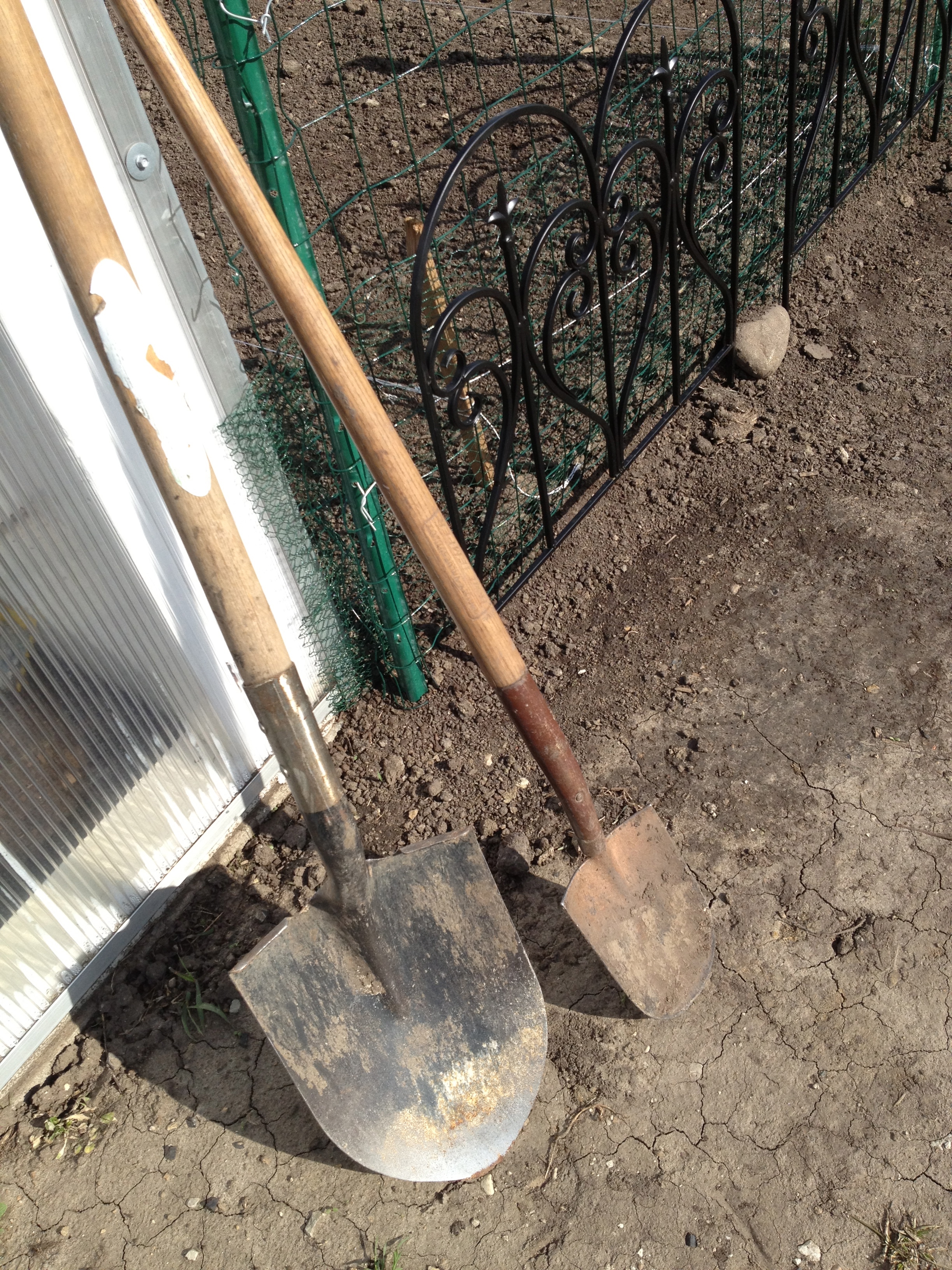
I started my tractor up for its first use of the season, scooped up loads of black composted soil from a giant pile I keep and distributed it over the new beds. I am good with the tractor, but realized that I enjoy moving about on it very slowly, not rushing it at all. I constructed a fence around the new garden, made of one layer of garden fence attached to green fence posts, and a second layer of poultry netting I fastened to the bigger fence with slim wire every so many inches. This will keep the rabbits out. The garden from last year was also cleaned up and made ready. I gave the onions and leeks a haircut, thinking of my stylist, readying them for their big move next week.
Someone else told me once that, when you explode into a new level of spiritual awareness, you might want to go off and live in the wilderness, or the desert, or the mountains, or a monastery, and never come back. But one key to embracing your full purpose is that you might come back. You have to find the way in between, to move from one “place” to the other. This has been my transition for years, or series of transitions. And now, I have decided try again with acceptance and surrender, and to be here and there and here and there and no-where, and connected regardless of where. To carry on with it all. Or try, again. Aspens, tomatoes, clients, causes, enlightenment, nurturing, loving. Compassion. The common thread is the deep chord of compassion. The wilderness could make you ready to face the world. When you move plants started from seed in the greenhouse to the outdoors for the season, you have to “harden them off.” This means, from my research, that you must move them outside during the day, keep them in a somewhat protected area, allow them to feel the winds and cooling temperatures of evening, but then you take them back inside for the night. This goes on for a transitional period, until they can thrive out in the weather.
Tagged: nature
 wakingtoyournature